Understanding Non-Invasive Body Contouring: What Modern Technology Can (and Can’t) Do
Understanding Non-Invasive Body Contouring: What Modern Technology Can (and Can’t) Do
Introduction: Why So Many People Are Curious About Body Contouring
If you eat well, stay active, and still feel like certain areas of your body refuse to change, you’re not alone. Many adults reach a point where lifestyle habits are solid—but stubborn fat, reduced muscle tone, or skin texture changes don’t respond the way they used to.
This is where non-invasive body contouring often enters the conversation.
This article is designed to help you understand:
What non-invasive body contouring actually is
How modern technologies work beneath the surface
Who these treatments may help—and who they may not
What realistic results and timelines look like
Most importantly, it will clarify how an education-first, personalized approach makes a meaningful difference in outcomes.
Why Body Contouring Has Become So Popular
Body contouring is not about chasing perfection or “fixing” your body. For many people, it’s about alignment—helping their physical appearance better reflect their effort, health habits, or personal goals.
Several factors contribute to increased interest:
Natural changes in metabolism with age
Hormonal shifts that affect fat distribution and muscle tone
Busy lifestyles that limit training consistency
Desire for solutions without surgery or downtime
Non-invasive treatments are designed to support the body—not override it.
How Non-Invasive Body Contouring Technology Works
One of the most common misconceptions is that all body contouring does the same thing. In reality, different technologies target different tissues, and understanding that distinction is key.
Fat Reduction vs. Muscle Building
Fat cells and muscle fibers respond to completely different types of stimulation.
Fat reduction technologies commonly use radiofrequency or thermal energy to stress fat cells, which the body may gradually process over time.
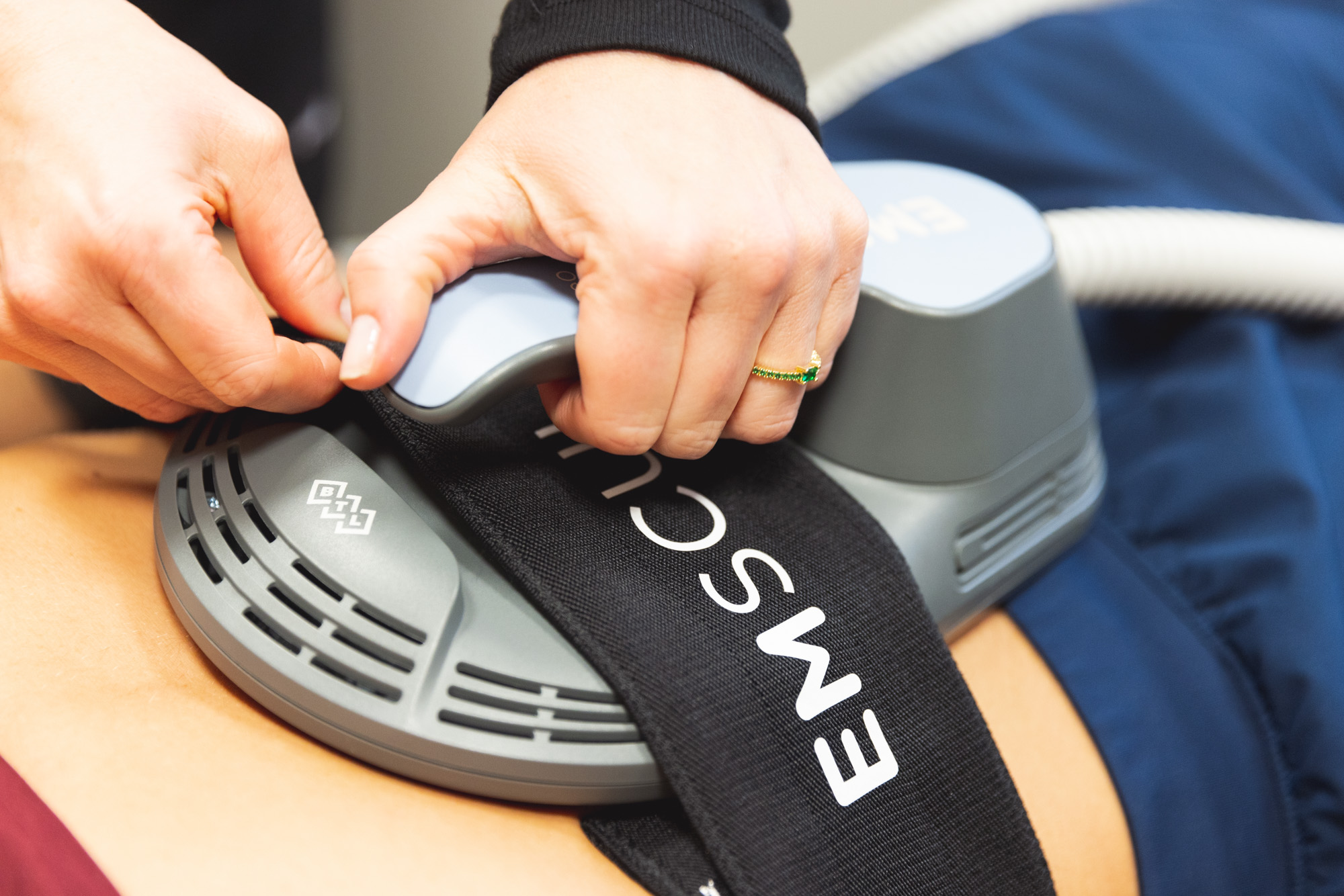
Muscle-stimulating technologies use high-intensity electromagnetic energy to trigger powerful muscle contractions—far beyond what voluntary exercise typically achieves.
Some platforms, such as Emsculpt Neo, are designed to address both tissues in a single session by combining these energies.
Skin Tightening vs. Skin Quality
Skin concerns are also layered:
Skin tightening focuses on firmness and laxity by heating deeper layers to support collagen remodeling.
Skin quality refers to texture, tone, hydration, and surface smoothness.
Technologies like Exion and Emtone are commonly used to address these elements in different ways, depending on the goal.
Why Energy Matters
Non-invasive body contouring does not remove tissue surgically. Instead, it works by:
Stimulating biological responses
Encouraging gradual change
Supporting the body’s natural processes over time
This is why results are progressive, not immediate.
Who Non-Invasive Body Contouring Is For—and Who It’s Not
Commonly a Good Fit For:
Adults near a stable weight
People with specific areas they want to improve, not dramatic weight loss goals
Those interested in muscle tone, firmness, or shape enhancement
Individuals looking for treatments without anesthesia or downtime
May Not Be Ideal For:
People seeking significant weight loss
Individuals expecting instant or permanent results from a single session
Those unwilling to commit to a treatment plan or maintenance
A consultation is essential because eligibility depends on goals, health history, and expectations—not just interest.
What Results Typically Look Like (and When)
Results vary by person, treatment type, and consistency. That said, most people experience changes in phases.
Early Phase (Weeks 1–3)
Mild sensations of firmness or muscle engagement
Subtle changes in posture or tone awareness
Progressive Phase (Weeks 4–8)
More noticeable muscle definition or firmness
Gradual reduction in targeted fat thickness
Improved skin texture in treated areas
Maintenance Phase (Months 3+)
Results stabilize with ongoing care
Periodic maintenance sessions help support longevity
Non-invasive body contouring works best when viewed as a process, not a one-time fix.
How Body by Your Clinic Approaches Body Contouring Differently
Technology matters—but how it’s used matters more.
Education-First Consultations
Every treatment plan begins with understanding:
Your goals
Your lifestyle
Your timeline
This ensures recommendations are aligned with what you actually want—not what’s trendy.
Personalized Combinations
Many clients benefit from combining technologies, such as:
Muscle-focused treatments with skin-supporting therapies
Fat reduction paired with skin tightening
Body treatments complemented by SkinCeuticals skincare for skin health support
There is no universal protocol—only tailored plans.
Progress Tracking with Styku Body Scans
Visual change is not always obvious week to week. Styku Body Scans provide measurable data that helps:
Track subtle body composition changes
Adjust plans when needed
Keep expectations realistic and transparent
This data-driven approach supports informed decisions rather than guesswork.
Common Myths About Non-Invasive Body Contouring
Myth: It replaces exercise
Reality: It complements a healthy lifestyle—it doesn’t replace it.
Myth: Results are instant
Reality: Most changes develop gradually over weeks.
Myth: One session is enough
Reality: Series-based treatments are typically recommended.
Myth: All body contouring is the same
Reality: Different technologies address different tissues and goals.
Frequently Asked Questions
How many sessions are usually recommended?
This varies by treatment and goal, but many plans include a short series followed by maintenance.
Is there downtime?
Most non-invasive treatments allow you to return to daily activities immediately.
Does it hurt?
Sensations vary by technology, but treatments are generally well tolerated and do not require anesthesia.
Can treatments be combined?
Yes. Combination approaches are often used to address multiple concerns at once.
How long do results last?
Results can last with proper maintenance, lifestyle support, and periodic follow-up sessions.
Conclusion: Education Before Action
Non-invasive body contouring can be a powerful tool when used thoughtfully, responsibly, and with realistic expectations. The most successful outcomes come from understanding what the technology is designed to do, committing to a plan, and working with a provider who prioritizes education over hype.
If you’re curious, the next step isn’t treatment—it’s a conversation.
A consultation allows you to ask questions, explore options, and decide what makes sense for your body and goals.
Disclaimer:
Results vary. Treatments are not a substitute for medical care. A consultation is required to determine eligibility.

